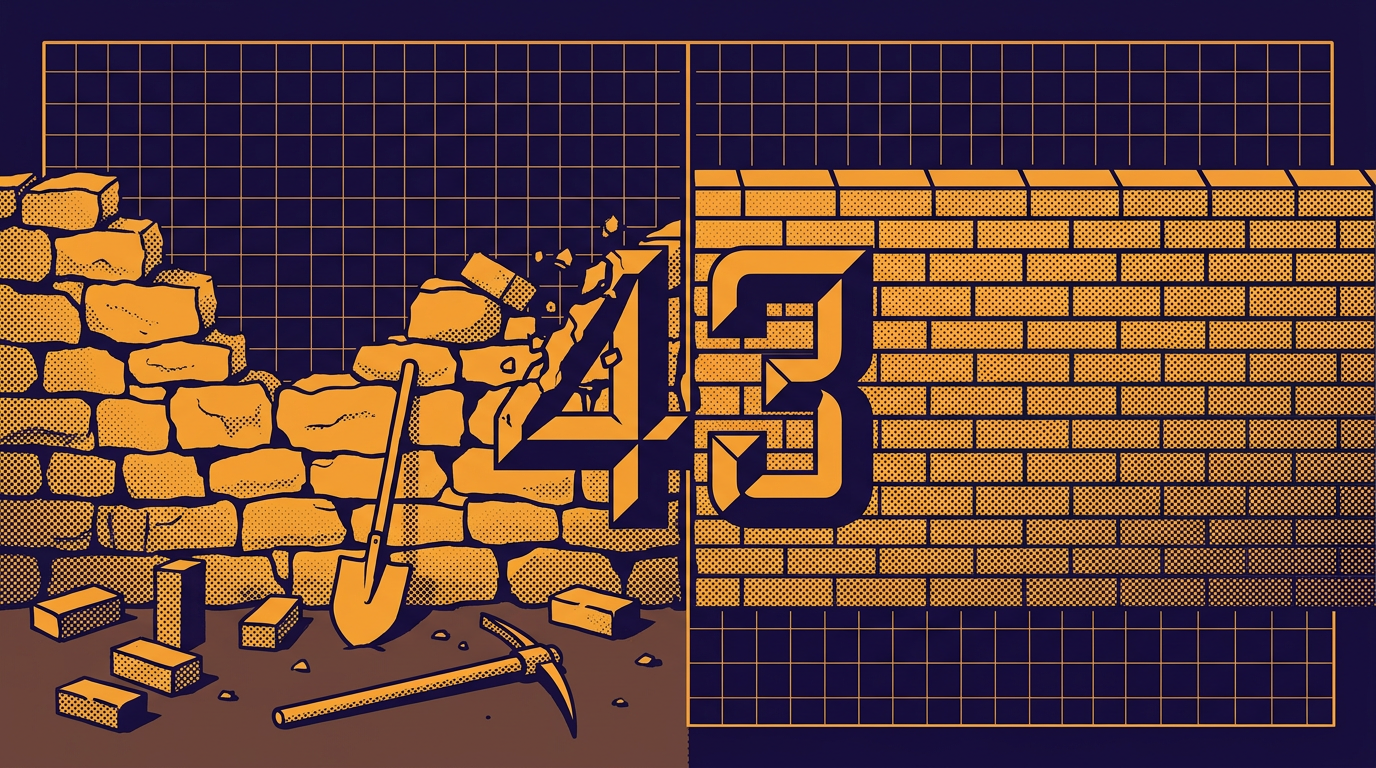
Some numbers in numerology carry a reputation that precedes them. And 13 might be the most unfairly loaded of all.
Most people encounter 13 through cultural superstition — Friday the 13th, skipped floors in hotels, the general sense that 13 is bad news. When they then discover that their numerology chart contains a karmic debt number 13, the first reaction is often dread. 'What does this mean for me? Am I cursed?'
Here's the thing: karmic debt 13 is not a curse, a punishment, or a cosmic bad-luck stamp. It's an assignment. A specific, traceable, and ultimately workable soul-level challenge that, once understood, actually explains a lot about patterns you've probably already noticed in your own life.
Let's get into what it actually means — and more importantly, what it's asking of you.
Why 13 Is the Most Misunderstood Karmic Debt Number
The four karmic debt numbers in numerology are 13, 14, 16, and 19. You can read about the full spectrum of karmic debt numbers to understand how they compare, but within that group, 13 has a particular PR problem.
The superstition around 13 in Western culture is centuries old. Triskaidekaphobia — the formal term for fear of the number 13 — is documented across architecture, aviation, and everyday decision-making. Studies have suggested that a significant portion of Americans are affected by this fear to some degree, which means most people bring a pre-loaded anxiety to any numerological discussion involving 13.
But in numerology, 13 reduces to 4 (1+3=4). And 4 is one of the most grounded, practical, hardworking energies in the entire number system. There's nothing ominous about it. What makes 13 a karmic version of 4 is the implication that in a previous existence (or in earlier patterns within this lifetime, depending on your interpretive framework), the qualities of 4 were avoided, misused, or left undeveloped.
So the 'debt' isn't supernatural. It's more like an incomplete credit requirement that keeps showing up on your transcript until you pass the course.
The Past-Life Pattern Behind Karmic Debt 13
What Numerologists Say About the Soul's History
In traditional numerological interpretation, karmic debt numbers point to patterns carried forward from previous lifetimes. The soul, in this framework, accumulates tendencies — both strengths and avoidances — and brings them into the current incarnation as unresolved material.
For karmic debt 13 specifically, the historical pattern involves a soul that took shortcuts. That avoided the slow, methodical, unglamorous work required to build something lasting. That perhaps relied on others to do the heavy lifting, or used charm and cleverness to sidestep real effort. (Sound familiar? A lot of people recognize this in themselves immediately.)
I think it's worth noting that you don't have to subscribe to a literal past-life belief system for this framework to be useful. Even if you read it purely psychologically — as a map of ingrained behavioral tendencies — the 13/4 pattern describes something real and recognizable.
The Avoidance of Hard Work and Its Consequences
The 'laziness debt' label that sometimes gets attached to karmic debt 13 is a bit uncharitable, but it's not entirely wrong. The core avoidance pattern is around sustained effort — specifically, the kind of effort that doesn't produce immediate results.
Number 4 energy is about building foundations. Brick by brick. Day after day. It's the energy of the craftsperson, the architect, the long-distance runner. When a soul has avoided this energy, the consequence in the current lifetime tends to be a recurring collision with situations that demand exactly that quality.
You can't charm your way through karmic debt 13. You can't think your way around it. Eventually, the work has to be done.
How Karmic Debt 13 Shows Up in Real Life
Procrastination and Self-Sabotage Patterns
This is the most commonly reported experience among people who identify with karmic debt 13. The pattern looks like this: you start something with genuine enthusiasm. You have a clear vision, real motivation, maybe even some early momentum. And then... it stalls.
Something comes up. The project gets complicated. The results aren't coming fast enough. You find yourself doing everything except the core work. And eventually, the window closes.
This isn't laziness in the conventional sense. People with karmic debt 13 are often highly capable, even talented. The issue is specifically with the sustained, unglamorous middle phase of any endeavor — the part where the initial excitement has faded but the results haven't arrived yet. That gap is where the karmic pattern activates.
Self-sabotage is the subtler version of this. It might look like picking fights with a partner right before a big deadline, or making an impulsive decision that derails a project you've been building for months. The soul, encountering the exact conditions it needs to grow through, sometimes flinches.
Frustration When Shortcuts Fail
Another hallmark of karmic debt 13: a recurring frustration with shortcuts that don't work. People with this energy often have a strong intuition that there should be a faster way. They're creative thinkers who can see elegant solutions. And sometimes those elegant solutions do work.
But with karmic debt 13, there's a pattern where the shortcut fails at a critical moment. The foundation wasn't solid. The preparation was skipped. And the whole structure collapses in a way that feels disproportionate — like the universe is making a very specific point.
Because it is. That's what karmic debt feels like in practice.
The Relationship Between 13 and the Number 4
Understanding the 13/4 connection is essential. The 4 is the destination — it tells you what quality is being developed. But the 13 adds intensity and urgency to that development. Think of it like the difference between taking a course and retaking a course you previously failed. The material is the same, but the stakes feel higher, and the lessons tend to land harder.
If you want to check where karmic debt numbers might appear in your own chart, a good starting point is to calculate your life path number and then look at the unreduced numbers in your calculation.
You can also explore how to find your karmic debt number using a step-by-step approach — it's not just the Life Path that matters.
Karmic Debt 13 in Different Chart Positions
This is where it gets genuinely interesting, and where most surface-level articles on karmic debt 13 fall short. Where the number appears in your chart significantly changes how the lesson manifests.
On the Life Path
When karmic debt 13 appears as a Life Path number (your birth date reduces to 13 before reducing to 4), this is your central life theme. The discipline-vs-avoidance tension isn't a subplot — it's the main storyline of your life.
Life Path 13/4 individuals often experience this as a life that seems to demand more effort than it 'should.' Things that come easily to others require real work for them. Projects take longer. Recognition arrives later. But when they commit to the foundational work, what they build tends to be genuinely solid — lasting in a way that fast-track achievements rarely are.
The shadow side for Life Path 13/4 is a tendency toward resentment. 'Why does everything have to be so hard for me?' is a common internal refrain. And that resentment, ironically, is part of what the karmic lesson is working through.
In the Expression or Destiny Number
When karmic debt 13 appears in the Expression Number (calculated from the full birth name), the lesson plays out primarily in how you engage with work, career, and public contribution. You might have a natural talent that you consistently underutilize. Or you might find that your professional life keeps hitting walls that only sustained effort can move.
The Expression Number governs how you show up in the world — your talents, your approach, your contribution. A 13/4 Expression often means that the person's gifts are real but require disciplined development to fully emerge. The raw material is there; the craftsmanship is what's being asked for.
In the Soul Urge
The Soul Urge (calculated from the vowels in your birth name) represents your inner motivations — what you actually want at a deep level, beyond the surface. A 13/4 Soul Urge is interesting because it creates an internal tension: the person deeply wants security, stability, and the satisfaction of building something real, but may unconsciously resist the process required to get there.
This is perhaps the most psychologically complex position for karmic debt 13. The desire and the resistance exist simultaneously, which can produce a particular kind of chronic frustration — wanting the outcome without being able to commit to the process.
For a broader look at how these different chart positions interact, understanding what a full numerology chart actually shows is genuinely useful context.
The Positive Side: What Mastery of 13 Looks Like
Let's be clear about something: karmic debt 13 is not a permanent sentence. It's a curriculum. And people who work through it develop something genuinely impressive.
Mastery of karmic debt 13 looks like:
Consistent follow-through. Not perfectionism, not workaholism — just the quiet discipline of doing what you said you'd do, day after day, even when it's not exciting.
Comfort with the long game. The person who has integrated their 13/4 energy stops looking for shortcuts not because they're resigned, but because they've genuinely come to trust the process. They know that solid foundations produce solid results.
Earned expertise. Because 13/4 individuals are pushed to actually do the work rather than talk about it, the expertise they develop tends to be real and deep. They become the person others come to when they need something done properly.
Resilience under pressure. Having been through the collapse of shortcuts multiple times, the integrated 13/4 person develops a particular kind of unflappability. They've learned to build things that hold.
Practical Strategies for Working Through Karmic Debt 13
So what do you actually do with this information? Here's a framework that I think is genuinely useful rather than just spiritually satisfying:
1. Map your avoidance patterns. Before you can change the pattern, you need to see it clearly. Where in your life do you consistently start strong and then stall? What's the specific phase where things tend to fall apart? Getting honest about this is the first real step.
2. Build process, not motivation. Motivation is unreliable — it's high when things are exciting and low when they're not. The 13/4 lesson is specifically about the low-motivation phases. So instead of trying to stay motivated, build systems and routines that carry you through regardless of how you feel that day.
3. Finish small things deliberately. One of the most effective exercises for karmic debt 13 is to practice completing small, low-stakes projects all the way through. Not starting them — finishing them. This builds the neural and behavioral pathways that make completion feel natural rather than foreign.
4. Notice the shortcut impulse without acting on it. You don't have to eliminate the impulse — that's not realistic. But you can develop the habit of noticing when you're reaching for a shortcut and pausing to ask: 'Is this genuinely efficient, or am I avoiding the foundational work?'
5. Reframe effort as the point, not the obstacle. This is the deeper psychological shift. For someone with karmic debt 13, the effort isn't the unfortunate price you pay for results — it's the actual curriculum. The work is where the growth happens.
It's also worth checking whether you might have other karmic influences at play. Understanding the difference between karmic debt numbers and karmic lessons can help you see which patterns are most active for you.
Famous People Thought to Carry Karmic Debt 13
Numerologists have associated karmic debt 13 with several public figures, though it's worth noting that celebrity numerology involves some interpretive variation depending on which chart positions are being analyzed.
The pattern that tends to get pointed to in public figures associated with 13/4 energy is a career trajectory marked by significant early struggle, periods of apparent failure or stagnation, and then a breakthrough that arrives only after a sustained period of genuine foundational work. The 'overnight success that was actually ten years in the making' is a very 13/4 story.
What's interesting about looking at public figures through this lens isn't the specific names — it's the pattern. The discipline-first, results-later arc is recognizable across many domains: artists who spent years in obscurity before their work found an audience, entrepreneurs who failed multiple times before building something that lasted, athletes who were overlooked until they outworked everyone around them.
If you're curious about how numerology maps onto public figures more broadly, the life path number celebrities analysis is worth exploring — it shows how these patterns play out across different number types.
13 vs. the Other Karmic Debt Numbers: How It Differs
Karmic debt 13 is sometimes confused with the other karmic debt numbers, but each has a distinct flavor. Here's how 13 compares:
| Karmic Debt | Reduces To | Core Theme | Primary Challenge |
|---|---|---|---|
| 13 | 4 | Discipline and effort | Avoidance of sustained work, self-sabotage |
| 14 | 5 | Freedom and responsibility | Overindulgence, inconsistency, excess |
| 16 | 7 | Ego and humility | Pride, isolation, spiritual bypassing |
| 19 | 1 | Independence and interdependence | Selfishness, refusal to accept help |
Karmic debt 13 is the most 'earth-bound' of the four. While 16 and 19 involve more complex psychological and spiritual dynamics, 13 is almost refreshingly concrete: do the work, build the foundation, finish what you start. The challenge is straightforward even when the execution isn't.
This is also what makes karmic debt 13 particularly actionable. You can't think your way out of 16's ego patterns or 19's isolation tendencies as directly as you can address 13's avoidance. The path forward with 13 is, in a sense, the most literal: you learn by doing.
If you want to understand whether you actually carry a karmic debt number — and which one — the most reliable approach is to check whether you have a karmic debt number using a systematic method rather than guessing.
Where to Go From Here
If you've recognized yourself in this description of karmic debt 13, the most useful thing you can do right now isn't to read more about it. It's to identify one project, commitment, or goal that you've been avoiding the foundational work on — and take one concrete step toward it today. Not a planning step. Not a research step. An actual, tangible, this-moves-the-thing-forward step.
That's the 13/4 lesson in its most distilled form. And every time you choose it over the shortcut, you're doing exactly what the karmic curriculum is asking of you.